
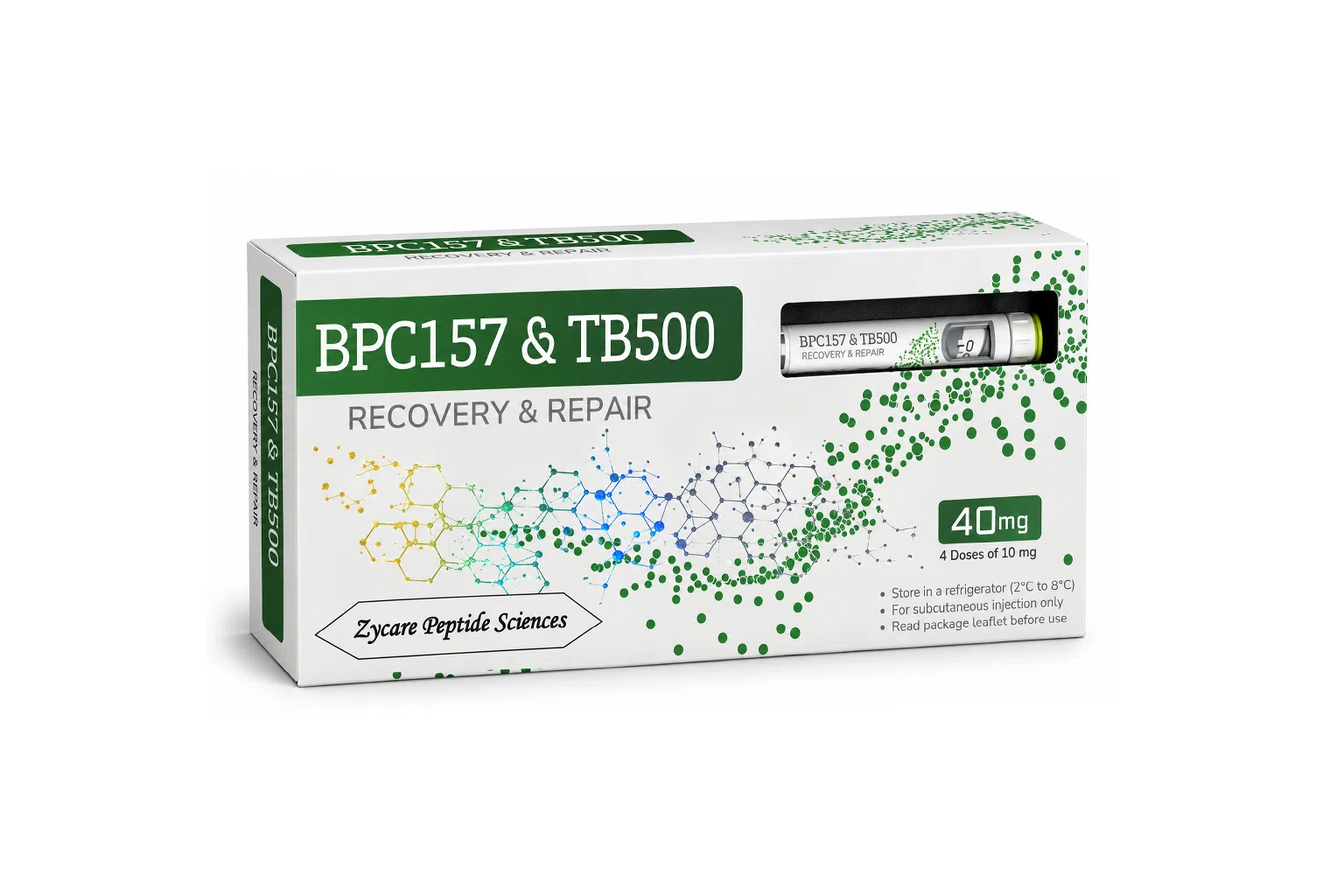
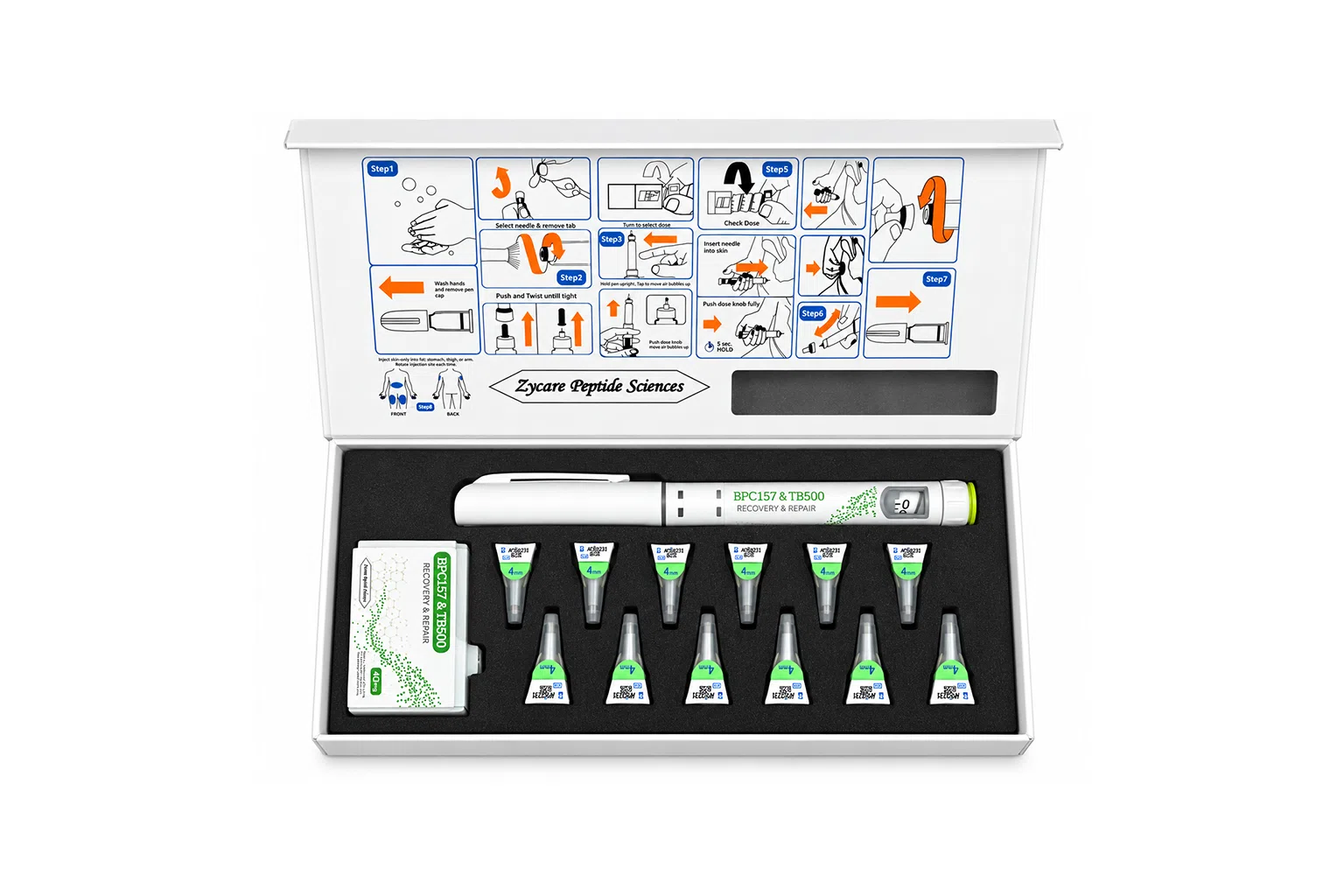
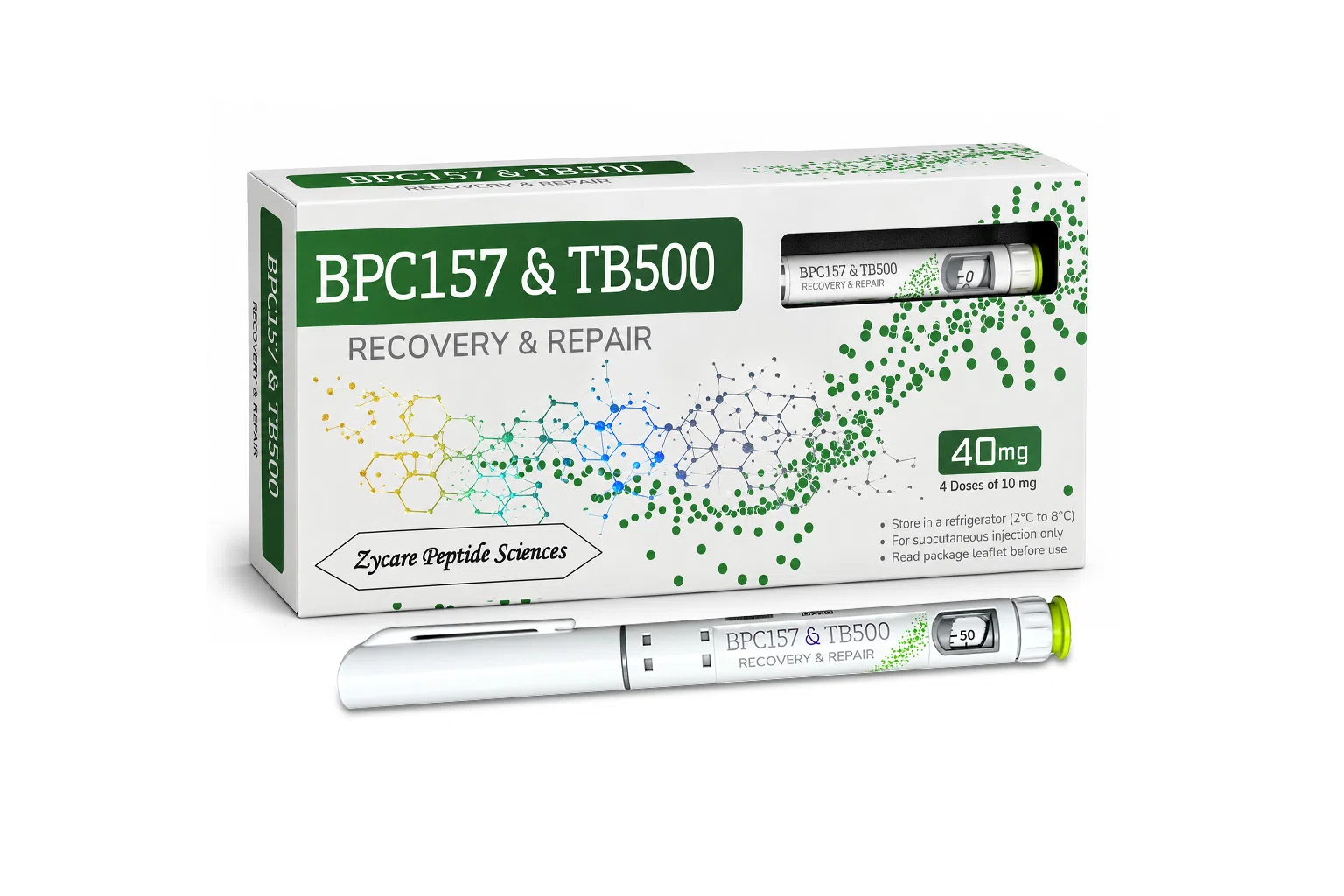
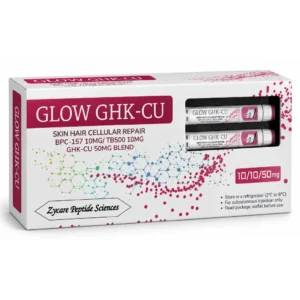
BPC 157 & TB500 40 mg is a research chemical peptide blend formulated to support tissue repair and recovering by combining BPC-157 ability may enhances healing and also may reduce inflammation whereas TB-500 may plays crucial role in cell migration and regeneration of tissue. They may work by increasing VEGF and Nitric oxide this may leads to new blood vessels and there is increase in blood flow to injury. Also organizes collagen and fibroblast to create a repair scaffold.
Key Features
| About | |
| Drug Class | Research chemical |
| Subclass | Cytoprotective peptide and Actin-binding peptide |
| Active ingredient | Pentadecapeptide and Thymosin Beta-4 fragment |
|
BPC 157 & TB500 40 mg |
|
| Composition | Active ingredients
BPC-157 (Pentadecapeptide) TB-500 (Thymosin Beta-4 fragment) Inactive ingredients: Lyophilized powder Bacteriostatic water |
| Packaging Type | Type 1 Borosilicate glass vial |
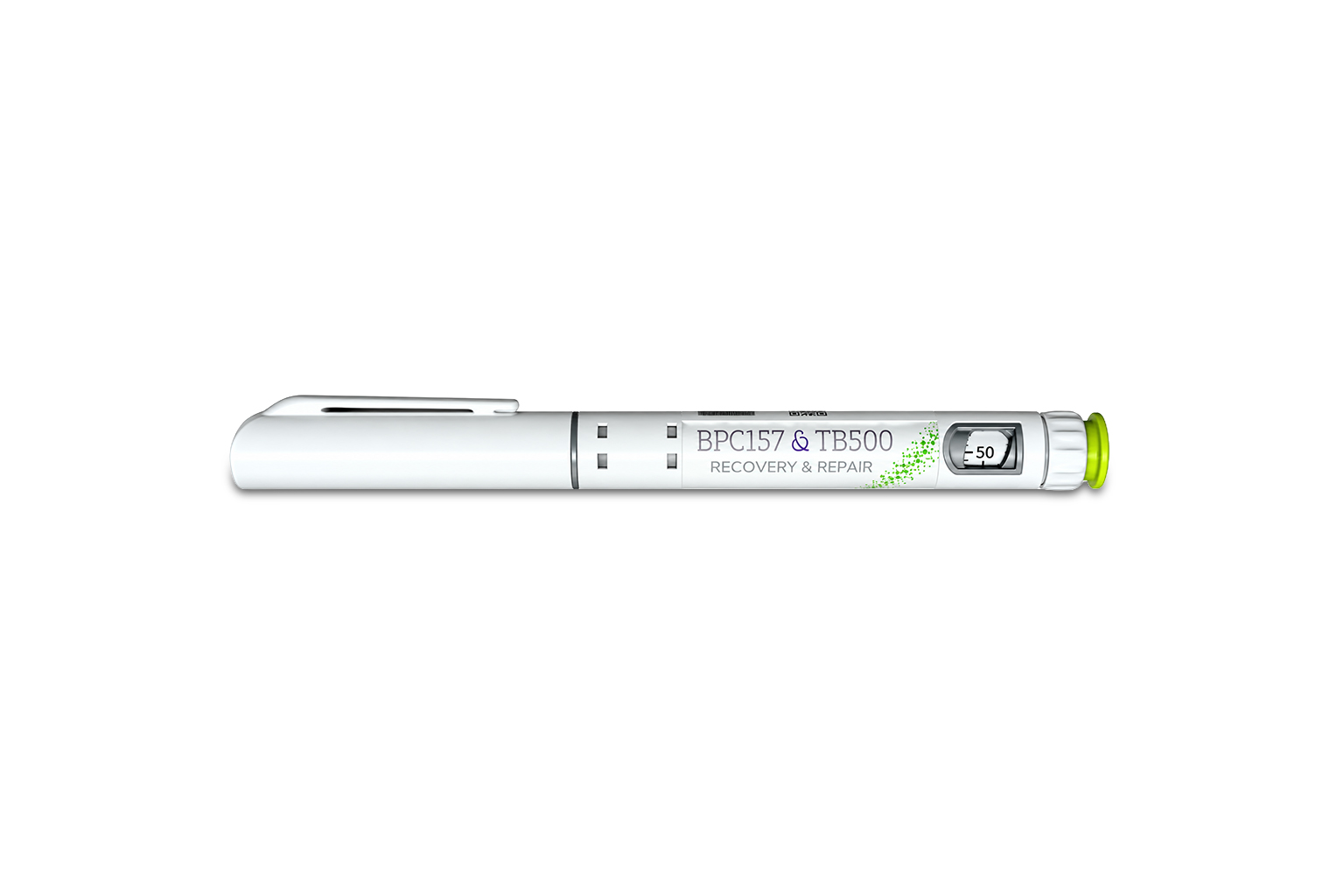
| Pack Size | 1 Pen |
| Dosage | 40 mg |
| Active ingredients | Pentadecapeptide and Thymosin Beta-4 fragment |
| Manufacturer | Alluvi Healthcare |
| Shelf Life | 2-3 years if sealed |
| Usages | Healing and Repair |
| Country of Origin | India |
How does BPC-157 and TB-500 work?
- BPC-157 may works by increasing VEGF and Nitric oxide this may leads to new blood vessels and there is increase in blood flow to injury. Also organizes collagen and fibroblast to create a repair scaffold.
- TB-500 directs cell migration this involves binding of G-actin and tends stem cells, endothelial cells, and keratinocytes to move into damaged tissue and rebuilt it.
- This may show anti-inflammatory and anti-fibrotic action.
- BOC-157 lays down blood supply and matrix whereas TB-500 recruits repair cells into it. Combining they enhance tendon, ligament, muscle, gut, and nerve repair.
Usage
- It can be used in repair and healing.
- They mainly focus on rebuilding tissue and improving cell motility also in managing the inflammation that can slow down healing.
- Supports the structural integrity of your skin and connective tissues.
- It is also known to be as regenerative medicine.
Dosage
- It can be injected in abdomen or near to the injury.
- Do not use it without consulting your healthcare provider.
Side effects
- Redness
- Lumps
- Headache
- Dizziness
- Flushing
- Anxiety
- Fatigue
- Lethargy
- Allergic reaction
Interaction
- It may interact with anticoagulants like warfarin, Eliquis, Aspirin it may increase NO+ level and may lead to angiogenesis.
- It should be avoided during chemotherapy as both promote cell survival and angiogenesis. It may protect cancer cells from chemo so it should be avoided.
- It may act like immunosuppressants also may interfere with tacrolimus and cyclosporine.
- It may also interact adversely with corticosteroid as prednisone may blocks healing.
Pharmacokinetics
- BPC-157 may reaches the Tmax level within just 30-90 minutes and TB-500 may reaches peak plasma level at 1-2 hours.
- Half-life is about 4 hours.
- It may follow hepatic or renal elimination or excretion.
Precautions
- The one with active cancer or history of malignancy should avoid such peptides.
- Pregnant and Breastfeeding should avoid such peptides.
- The one with prior medical history of cardiovascular, autoimmune and one with organ transplant should avoid such peptides.
Conclusion
BPC 157 & TB500 40 mg is a research chemical peptide blend formulated to support tissue repair and recovering by combining BPC-157 ability may enhances healing and also may reduce inflammation whereas TB-500 may plays crucial role in cell migration and regeneration of tissue. They may work by increasing VEGF and Nitric oxide this may leads to new blood vessels and there is increase in blood flow to injury. Also organizes collagen and fibroblast to create a repair scaffold. It may show side effects like redness, lumps, headache, dizziness, flushing and anxiety it can be avoided by consulting your medical professional.
FAQs
- What for BPC-157 and TB-500 40 mg is used?
BPC 157 & TB500 40 mg is a research chemical peptide blend formulated to support tissue repairing, healing and recovery.
- How does BPC-157 and TB-500 work?
BPC-157 and TB-500 may work by increasing VEGF and Nitric oxide this may leads to new blood vessels and there is increase in blood flow to injury. Also organizes collagen and fibroblast to create a repair scaffold.
- What can be the possible side effects of BPC-157 and TB-500 40 mg?
The possible side effects of BPC-157 and TB-500 40 mg can be redness, lumps, headache, dizziness, flushing and anxiety.
- Who should avoid BPC-157 and TB-500 40 mg?
The pregnant women, breast feeding women and the one with on-going chemotherapy should avoid BPC-157 and TB-500 40 mg.
- What can be the onset of action of BPC-157 and TB-500 40 mg?
The onset of action of BPC-157 and TB-500 40 mg is BPC-157 may reaches the peak plasma level within just 30-90 minutes, whereas TB-500 reaches at its peak in 1-2 hours.
delaney watkins –
I’ve been taking this for a while now. I don’t just notice a fast recovery, but I also have more energy during my daily activities. Highly suggest this
Ethan Rodriguez –
I started using the BPC-157 and TB-500 blend mainly for recovery. I noticed some mild redness around the injection area initially, but it settled down. Overall, I’ve had a good experience with it.
Daniel Kim –
I’ve been using this as part of my recovery routine and have noticed that I don’t feel quite as stiff after training. No major issues for me.
Maya Thompson –
Recovery after my workouts seems to be better since adding this peptide blend to my routine. I did experience a little fatigue at first, but it wasn’t severe and went away. So far, I’m satisfied with the results.
Jason Cohen –
The main thing I’ve noticed is that my recovery feels more manageable after intense workouts. I had some mild fatigue in the beginning, but it improved with time. Overall, it has been a positive experience.
Ava Johnson –
I chose the BPC-157 and TB-500 blend because I wanted something focused on recovery and tissue support. I haven’t noticed any significant problems and feel that it fits well into my routine.
Olivia Nguyen –
I’ve been consistent with my routine and feel like my post-workout recovery has improved. I haven’t had any major side effects, and overall I’m pleased with how the BPC-157 and TB-500 blend has worked for me.