
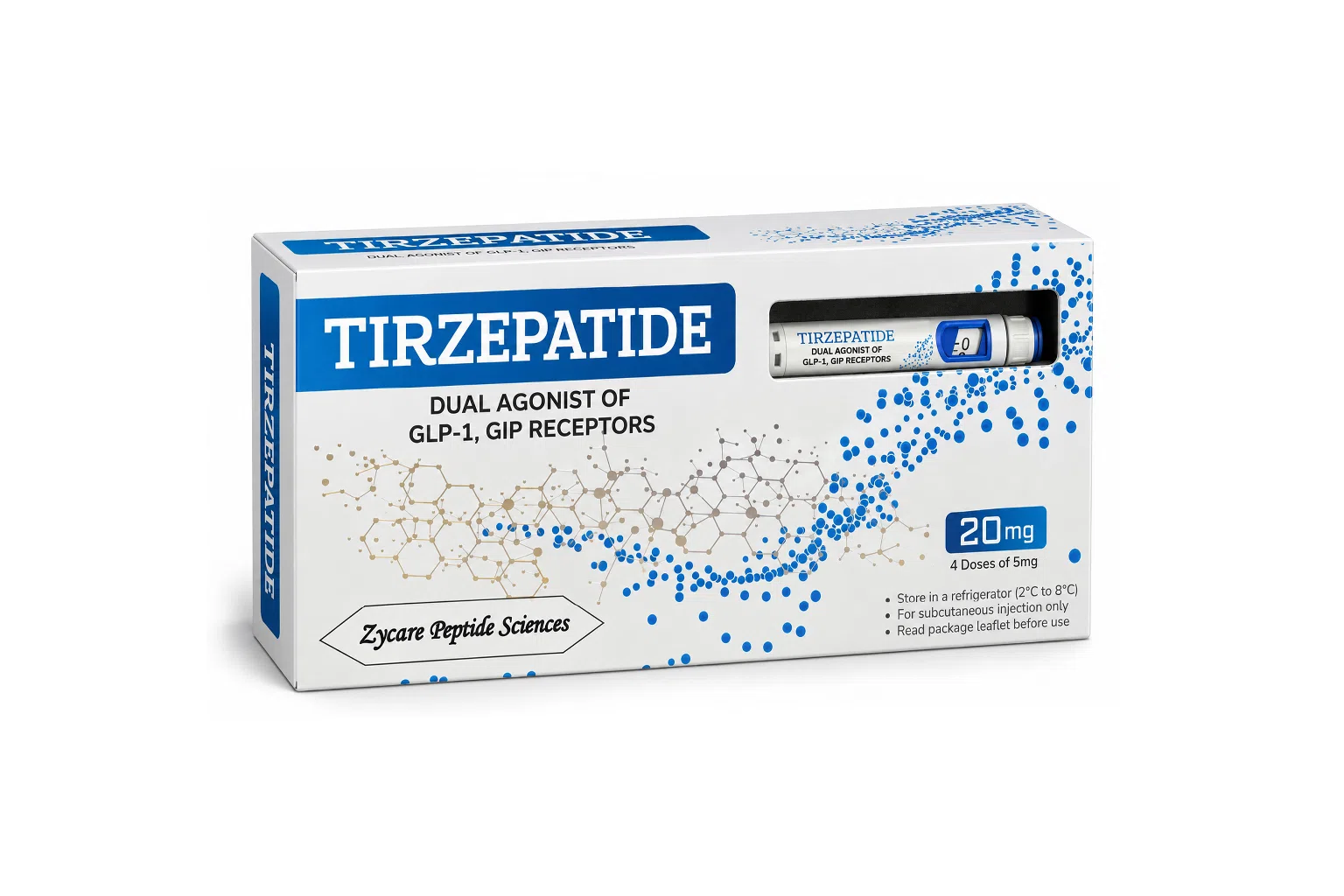
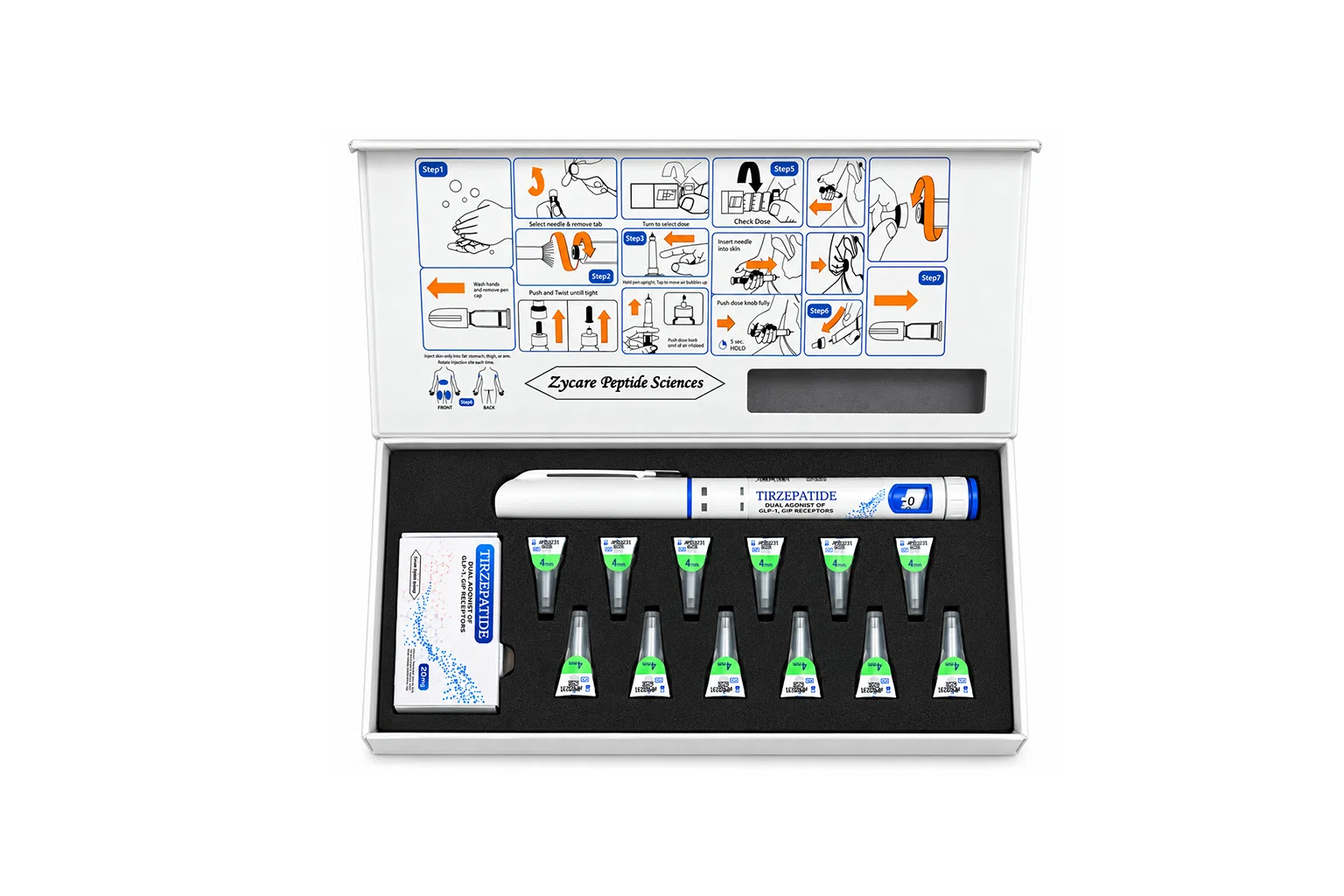
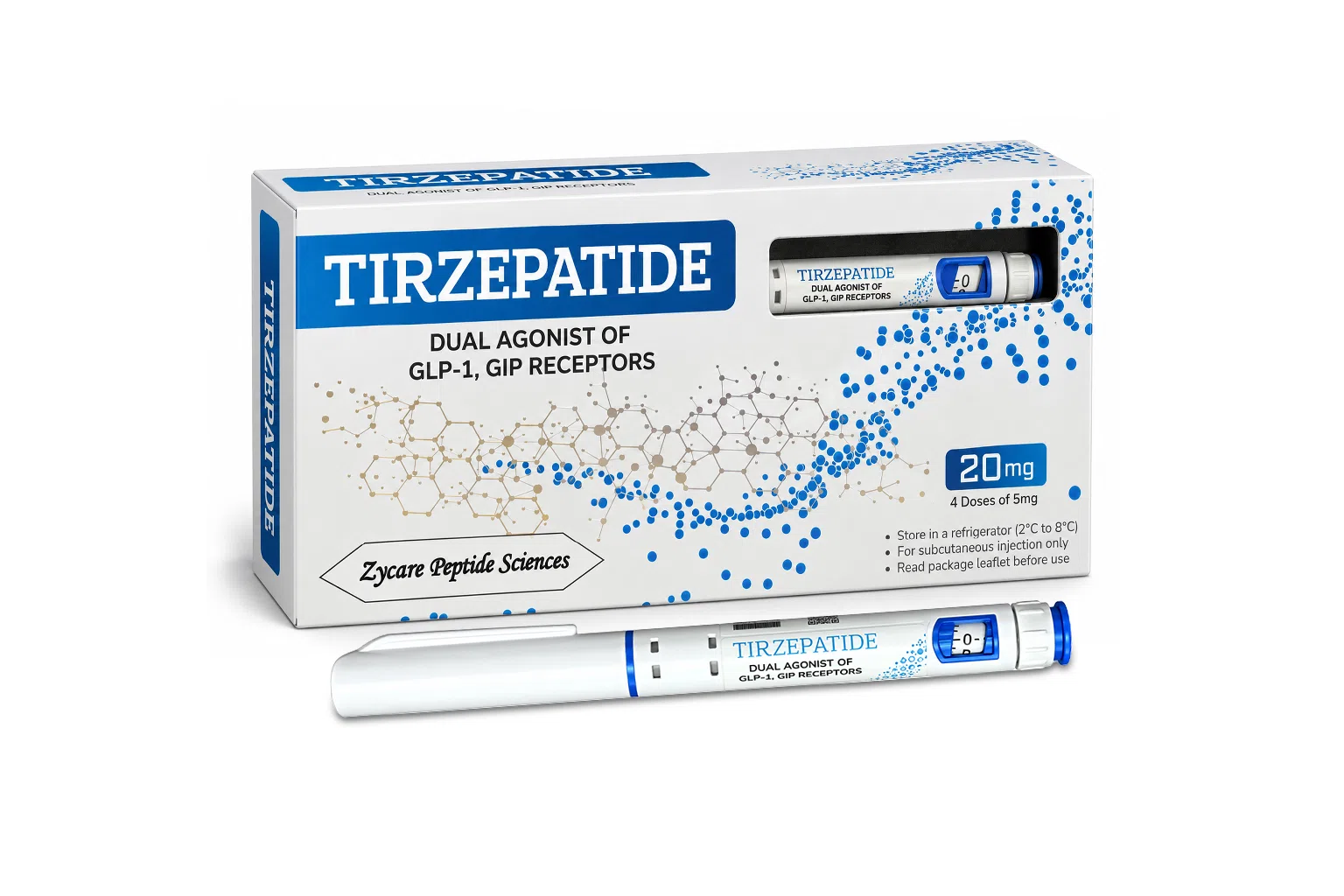
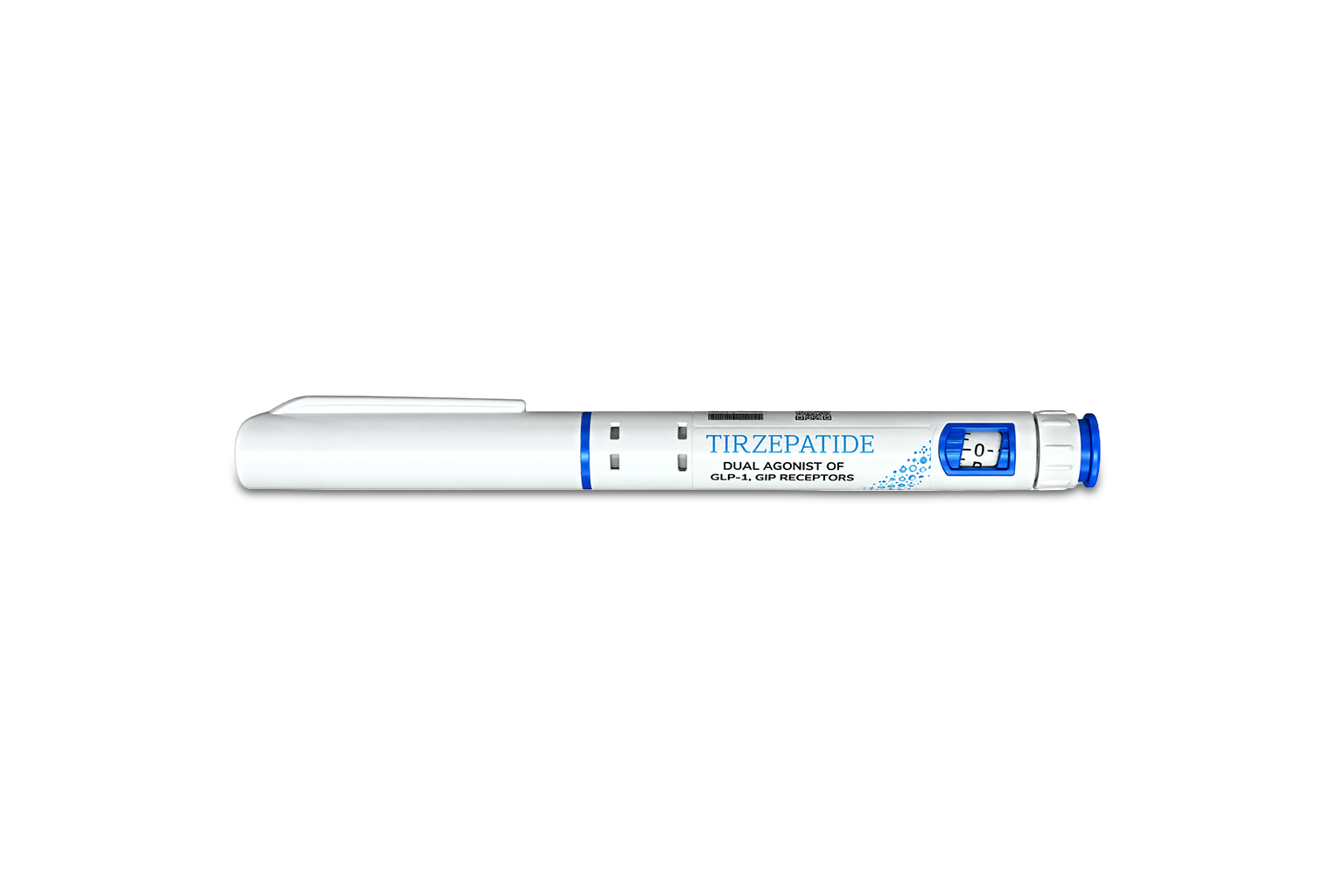
Tirzepatide is a once-weekly injectable dual GIP (glucose-dependent insulinotropic polypeptide) and GLP-1 (glucagon-like peptide-1) receptor agonist. It is a synthetic 39-amino-acid peptide used with diet and exercise to improve blood sugar control in adults with Type 2 diabetes mellitus and for chronic weight management in adults. It must be used under medical supervision.
Key Features
| About | |
| Drug Class | Antihyperglycemic agent |
| Subclass | Dual GIP/GLP-1 receptor agonist |
| Tirzepatide 20 mg | |
| Composition | Active ingredients
Inactive ingredients:
|
| Pack Size | 1 Pen or vial |
| Dosage | 20 mg |
| Manufacturer | Zycare Peptide Sciences |
| Shelf Life | Two years refrigerated for unopened pens |
| Usages | Weight Management & Type 2 Diabetes |
| Country of Origin | India |
How does Tirzepatide 20 mg work?
- GIP receptor agonism: Enhances first-phase insulin secretion, improves insulin sensitivity and may reduce food intake through central action.
- GLP-1 receptor agonism: Stimulates glucose-dependent insulin secretion, suppresses glucagon, slows gastric emptying and increases satiety.
Usage
- Improving glycemic control in adults with Type 2 diabetes mellitus, alongside diet and exercise.
- Chronic weight management in adults with obesity, or with being overweight and a weight-related condition, alongside a reduced-calorie diet and increased physical activity.
Dosage
- Given once weekly by subcutaneous injection, with the dose increased gradually as directed by your prescriber.
- Per the approved prescribing information, treatment typically starts at 2.5 mg weekly for 4 weeks, then increases to 5 mg weekly. Further increases of 2.5 mg are made after at least 4 weeks on the current dose. The maximum is 15 mg weekly.
- The 20 mg total content of this pen or vial supports multiple weekly doses and does not mean a 20 mg dose. Do not self-adjust your dose.
Side effects
- Nausea
- Diarrhea
- Decreased appetite
- Vomiting
- Constipation
- Dyspepsia
- Abdominal pain
- Pancreatitis
- Gallbladder disease
- Acute kidney injury from dehydration
- Severe gastroparesis
- Hypersensitivity
- Hypoglycaemia
Interactions
- Oral medicines: Slowed gastric emptying may change the absorption of oral drugs. Discuss timing with your prescriber, especially for narrow therapeutic index drugs.
- Insulin and sulfonylureas: Increased risk of low blood sugar. Doses may need adjusting.
- Oral contraceptives: May reduce effectiveness.Use a backup method of contraception for 4 weeks after you start treatment and after any increase in dose.
- Warfarin: Monitor as directed by your prescriber.
- Alcohol: May increase the risk of nausea and pancreatitis.
Pharmacokinetics
- Half-life is about 5 days, supports once-weekly dosing.
- Tmax is about 8-72 hours after subcutaneous injection.
- Steady state: about 4 weeks.
- Bioavailability: approx. 80% (subcutaneous).
Precautions
Tell your doctor before use if you have:
-
- A history of pancreatitis, gallbladder disease or severe gastrointestinal disease
- Diabetic retinopathy (rapid glucose lowering may worsen it)
- Kidney impairment (higher dehydration risk with GI side effects)
- A history of depression or suicidal thoughts
- Pregnancy, plans to conceive or breastfeeding
Conclusion
Tirzepatide is a once-weekly dual GIP/GLP-1 receptor agonist for Type 2 diabetes and chronic weight management. It can cause side effects and carries important warnings, so use it only as prescribed and under medical supervision.
FAQs
- What is the use of Tirzepatide 20 mg?
Tirzepatide 20 mg is used in dealing with Type 2 Diabetes Mellitus and weight management. - How does Tirzepatide 20 mg may work?
Tirzepatide 20 mg may work by enhancing first-phase insulin secretion, it also improves insulin sensitivity and acts on GIP receptors in the brain to reduce food intake and increase satiety. - What can be the possible side effects of Tirzepatide 20 mg?
The possible side effects can be nausea, diarrhea, decreased appetite, vomiting, constipation, dyspepsia, abdominal pain, pancreatitis and gallbladder disease. - Is Tirzepatide safe?
Yes, Tirzepatide is safe when used up-to 15 mg, but you need to consult your healthcare provider prior to taking any such medications or while increasing dosage. - Is Tirzepatide safe during pregnancy or breastfeeding?
It is not recommended in pregnancy, and you should tell your doctor if you are planning a pregnancy. Ask your doctor before using it while breastfeeding.
Note: Tirzepatide is a prescription medicine. This information is for education only and does not replace advice from your healthcare provider.

ryan wagner –
For the first time in years it felt like I wasn’t constantly craving food. This has definitely helped me gain more control over my body
Petter Cattaneo –
The ordering process was straightforward, and the product arrived securely packaged. Everything was presented neatly, and the overall experience was smooth.
Deirdre Costello –
I liked the professional packaging and clear product presentation. The product was delivered safely and was easy to manage as part of my routine.
Denis Lill –
Good overall experience with the product. The packaging was secure, delivery was convenient, and everything arrived in good condition.
Gwyneth Strong –
The product was well protected during shipping and arrived as expected. I appreciated the simple ordering process and professional presentation.
John Challis –
Everything from placing the order to receiving the product was hassle-free. The packaging was neat and secure, which gave me a good overall impression.
James Marquard –
A straightforward experience overall. The product arrived properly packed and in good condition, and the ordering process was simple and convenient.